FORTHCOMING
Beneath the Grid by Tse-Wen Tsao
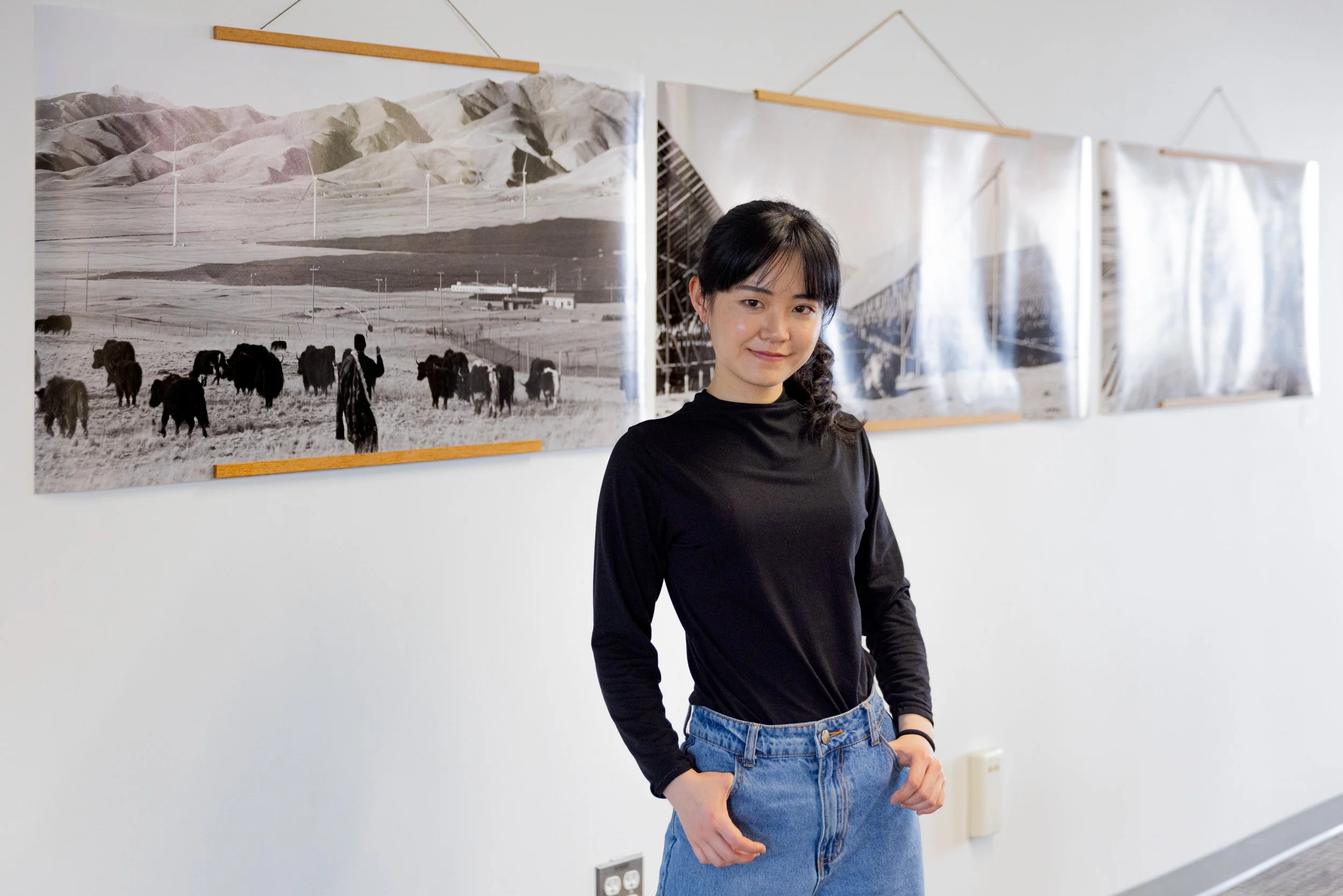
Beneath the Grid is a long-form conceptual documentary project examining the tension between renewable energy development, environmental transformation, and the rights of communities whose livelihoods depend on the land. The ongoing series focuses on the Tibetan Plateau, where large-scale photovoltaic power stations and wind turbines are increasingly constructed across traditional grazing lands as part of broader efforts toward carbon neutrality.
The project grows from my long-term relationship with local Tibetan pastoral communities. I lived alongside nomadic families for more than eight months and have repeatedly returned to the region over several years. Through sustained engagement with herders and their everyday lives, I have observed how the expansion of renewable energy infrastructure has altered landscapes, grazing practices, and relationships to land.
The photographs combine ground-based and aerial perspectives with a stark black-and-white visual language. Removing color shifts attention away from the picturesque associations often attached to the Tibetan landscape and emphasizes the geometric structures and material presence of industrial infrastructure. From above, vast fields of photovoltaic panels form abstract patterns across the plateau; from the ground, their scale is encountered alongside livestock, herders, and the rhythms of pastoral life. This contrast reveals the uneven relationship between monumental systems of energy production and the individuals living within their reach.
Rather than presenting renewable energy as either inherently beneficial or destructive, Beneath the Grid considers the complexities and contradictions embedded in the pursuit of sustainability. Informed by my background in cinematography, the project also incorporates moving image and sound, extending the photographic series into a multisensory installation. By bringing industrial infrastructures into dialogue with human presence and the fragile ecosystems around them, the work asks how environmental progress can be pursued without reproducing forms of social and ecological inequality.
Show Dates: Monday, October 19 - Friday, November 20, 2026
Opening Reception: Saturday, October 24, 6–8 PM
Artist Talk & Closing: Saturday, November 14, 4-6 PM
Gormley Gallery (Newly Renovated)
Fourier Hall, 2nd Floor
About the Artist
Tse-Wen Tsao is a Taiwanese Baltimore-based visual artist working with photography and expanded image-making practices. Her work investigates how invisible systems shape contemporary life, landscapes, and human experience.
Growing up in Taiwan in proximity to the semiconductor industry and later living across Mainland China, the Tibetan Plateau, and the United States, Tsao developed a perspective shaped by moving across different cultural and political contexts. Her practice examines how large-scale systems are experienced differently across cultures and communities, revealing tensions between technological progress, political narratives, and lived realities.
Through documentary and aerial photography, staged and constructed imagery, and alternative photographic processes, Tsao explores the visible and invisible consequences of development. Her work considers how global systems transform the environments we inhabit and the ways we imagine our futures. Beneath the Grid examines the expansion of renewable-energy infrastructure across the Qinghai–Tibet Plateau and its impact on traditional grazing landscapes and Tibetan pastoral communities.
(Tsao holds a BFA in Cinematography from the Communication University of China and an MFA in Photography + Media & Society from the Maryland Institute College of Art. Her work has been exhibited in Baltimore at venues including Gormley Gallery at Notre Dame of Maryland University and The Crow’s Nest Gallery, and featured in publications such as BmoreArt and VoyageBaltimore. She was selected for the Arteles Creative Center Neo Future Program Residency in Finland and is a member of the American Society of Media Photographers and the Society for Photographic Education.)
Website: tsaotsewen.com
Instagram: @tsewentsao_art